
JETTY STORIES
magna aliqua. Ut enim ad minim veniam, quis nostrud. You can see our full line up here.
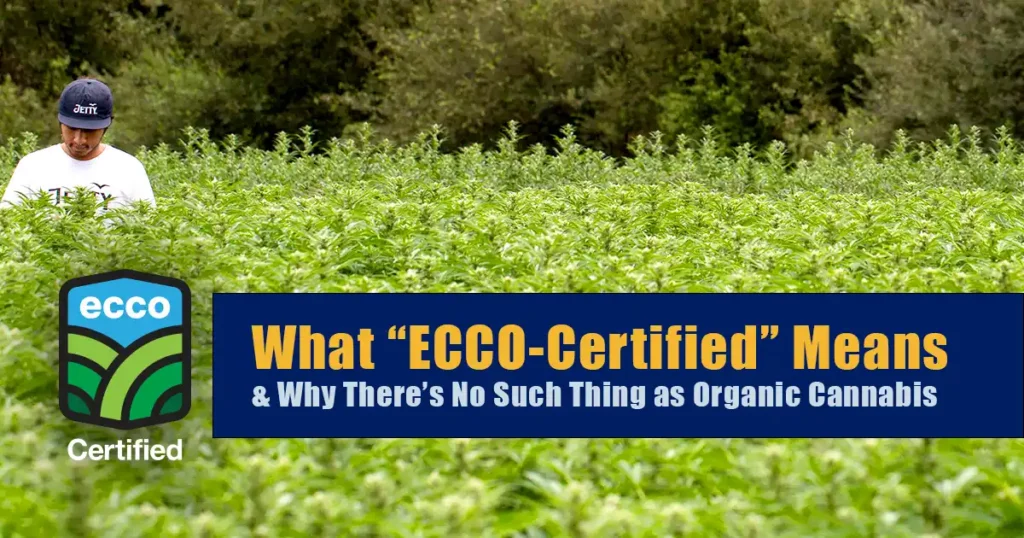
Table of Contents
The Push For Cleaner Cannabis
After a Los Angeles Times and WeedWeek News exposé in 2024 revealed that many legal, state-compliant cannabis products contained unsafe levels of pesticides that weren’t part of California’s standard compliance testing, a coalition of industry players decided something needed to be done.
The result was an independent, transparent and more stringent testing protocol that would help allay consumers’ fears. And ECCO certification was born.
Jetty Extracts’ Long History of Clean Cannabis
As Jetty Extracts co-founder and Chief Product Officer Nate Ferguson told me in a recent interview, the desire to deliver clean weed has been part of the brand’s DNA for a long time, pointing to the decision to remove fillers and cutting agents from their vape oil back more than a decade ago and long before it was an industry standard.
“One of our founding partners’ wives was pregnant at the time,” Ferguson said, “And we realized that no one really knows what these fillers are. We need to make something that is 100% pure cannabis oil. And we failed 10 times before we succeeded. And then the hardware failed because it wasn’t built for such a viscous oil. It was kind of brand-damaging at the time because we had so many returns but we had to get it right.”
Ferguson said he felt the same way back in October of 2024 when he first heard about the new program from Raw Garden’s Thomas Martin, one of the industry movers and shakers that brought it to life.
What Does “ECCO-Certified” Mean for Cannabis?
So, what does “ECCO-certified” exactly mean? Keep reading because we’ve got answers to that and a whole bunch of other burning clean-weed questions you probably have.
And, if you’ve got one we haven’t answered, feel free to drop us a line and we’ll do our level best to answer it!
Why Can’t I Find Organic Cannabis Products?
Spoiler: it’s not because no one’s trying—it’s because federal law says “organic” is off limits for cannabis.
Is this a trick question? Actually, it kind of is.
Basically, it’s because cannabis is illegal at the federal level and it’s a federal government department – the USDA – that’s in charge of determining what product packaging can bear the word “organic.”
That means you’ll never (legally) see a bag of bud or a vape cart sold emblazoned with the O-word.
To address this technicality, some states and private groups have stepped in to offer comparable-to-organic certification programs for cannabis products.
In California, that means looking for products bearing the OCal seal, Sun+Earth certification or the Clean Green Certified label.
Sun+Earth and Clean Green also certify farms, processors and products in other states too. (You’ll find comprehensive lists at each organization’s respective website.)
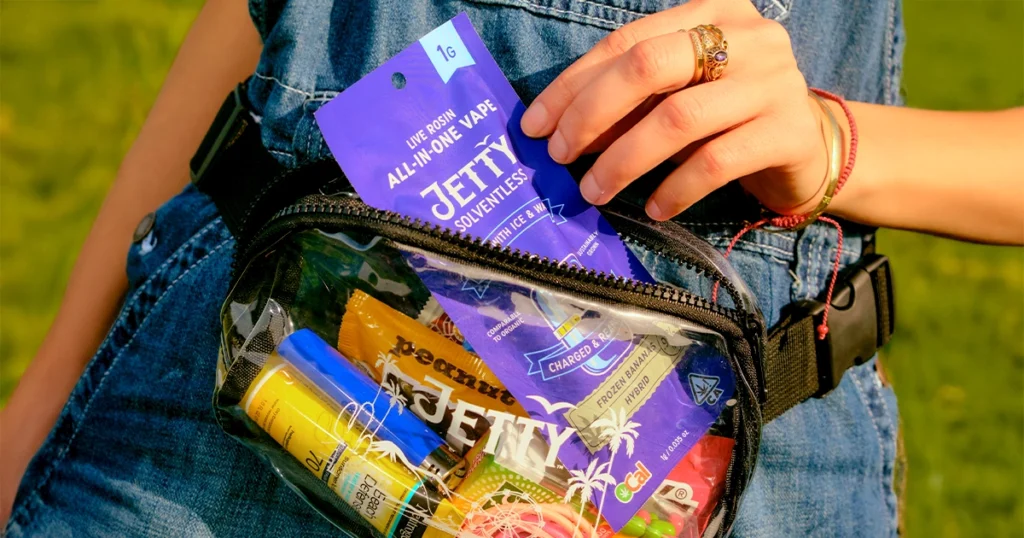
How Do I Know My Vape is Safe?
Psst… here’s a hint: it starts with a COA.
All cannabis products sold at state-licensed dispensaries – including vaporizer cartridges and concentrates – are required by the state of California to be tested for an extensive list of harmful chemicals and products that fail are either remediated or destroyed.
Ones that pass are issued a COA (Certificate of Analysis) that’s a matter of public record. That vape-related lung illness you remember reading about a few years back was caused by illicit, unregulated vape cartridges.
So, What Does ECCO Certification Mean?
In short: ECCO is the next-level certification cannabis has been waiting for, one that tests deeper, demands more, and tells consumers the full truth.
This is where things get exciting! ECCO (pronounced “echo” like that voice bouncing back at you from the canyon) is an acronym that stands for Environmental & Consumer Compliance Organization.
It’s a new, California-based, nonprofit, voluntary education and certification program for cannabis products. Founded in late 2024 by Ford Smith (Ultranative), Trent Overholt (Noble Pacific), Thomas Martin (Raw Garden) and Elliot Lewis (Catalyst), it was created in response to concerns about safety and quality in the legal California cannabis market.
The organization is currently led by Executive Director Jennifer Lujan. (Everyone wave to Jennifer!)
What Is Ecco Testing and How is it Different From California’s State-Mandated Testing and OCal Certification?
OCal certification requires adhering to the principles of organic farming including using natural fertilizers and pest control methods.
In addition, soil must be free of prohibited substances for at least three years prior to certification. Certification can only be granted by one of the state’s two registered certifying agents.
California’s current cannabis testing (sometimes referred to as Category 3 or “CAT3” testing, it doesn’t have anything to do with felines) requires screening of all cannabis products for heavy metals, mycotoxins, residual solvents and a laundry list of 66 pesticides – all before products are shipped to dispensaries.
ECCO certification requires passing what’s known as CAT4 testing—an expanded panel that currently tests for 144 contaminants, including 60+ additional pesticides not required to be tested for under state regulations.
In addition, two product SKUs from each brand are randomly selected and purchased in-person at dispensaries around the state each month and tested to ensure compliance.
If a brand passes, it has the option of including an ECCO Certification sticker on its outer packaging for a 12-month period so retailers and consumers can easily identify that the contents are pesticide free with the results published online for additional transparency.

ECCO at a Glance
- Founded in late 2024 in California
- Tests cannabis for over 140 contaminants (CAT4 testing)
- Random monthly product testing at dispensaries
- Transparent, published results
- ECCO sticker signals pesticide-free assurance
Why Does ECCO Certification Matter?
The ECCO program not only tests for the presence of a bunch of dangerous chemicals beyond those required by the state of California – and does so by buying products to test at the dispensary level (which, if you ask me, is giving serious secret-shopper vibes) – it also adds a layer of transparency by posting the results online.
And, most importantly, the ECCO sticker allows consumers to make conscious, educated choices about what products they put into their bodies.
That’s why Jetty is happy to be on board and excited to see where this goes!
Ready to see what clean cannabis looks like in action? Explore Jetty’s ECCO-Certified Vape Carts
How Do I Get My Cannabis Brand ECCO-Certified?
- Visit eccocert.org
- Click “Apply as a Brand”
- Membership starts at $700/month
- Two SKUs randomly tested per month
If you’re a cannabis brand doing the hard work to deliver the cleanest weed products possible, this is the point where you might be starting to wonder how to hop on board the ECCO train (thankfully, unlike an actual train, this metaphorical one isn’t spewing diesel fuel fumes into the atmosphere).
The first part is simple: Go to the ECCO website at eccocert.org and click on the big blue “Apply as a Brand” button in the upper righthand corner of the your screen (if you’re on a desktop) or on the three horizontal lines in a square (on your mobile device) to get the dropdown menu where you’ll find that big blue button.
You can also email Team ECCO for more information at info@eccocert.org. The monthly membership fee varies based on a company’s revenue and product categories and starts at $700.
Is ECCO Certification Only Available In California?
So far, ECCO has only certified products for the California market, but the organization is currently exploring other states.
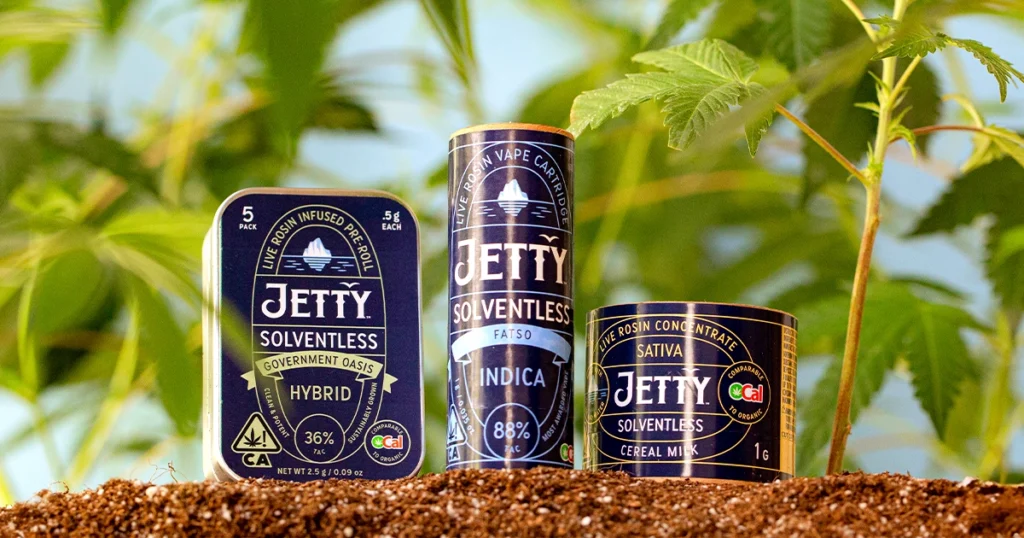
How Do I Find ECCO-Certified Weed Brands and Products?
To find ECCO-vetted brands, make your first stop the ECCO website, where you’ll find the list of cannabis companies that have passed the organization’s rigorous third-party testing and earned the right to display the ECCO badge for 12 months.
Although the list will grow as the program expands, the first group of certified brands—announced in March 2025—includes nine names, one of which is Jetty Extracts for its vape cartridges and infused prerolls. (And, to be honest, we’re pretty stoked about that.)
Joining Jetty in ECCO’s inaugural “clean weed” class are Raw Garden, Noble Pacific, Coastal Sun (which proudly supplies Jetty’s flower), LEEF, Conception Nurseries, Bloom, Soma Rosa Farms, and Howie Roll.
ECCO-Certified Brands (As of March 2025)
- Jetty Extracts – vape cartridges & infused prerolls
- Coastal Sun (Jetty’s flower supplier)
- Howie Roll
Next time you’re at your neighborhood dispensary, ask for these brands by name and keep your eyes peeled for that small shield-shaped ECCO sticker.
You can also ask your budtender (consulting—and tipping—your budtender is always a good idea), though since the ECCO program only launched in late 2024, some may still be getting familiar with it.
To help with consumer awareness, ECCO will be launching some in-store activations this fall and winter, so give them a follow on Instagram @ecco_cert to keep up to date.
The Future of Clean Cannabis
With ECCO leading the charge, cannabis consumers finally have a transparent way to identify clean, pesticide-free products, and brands like Jetty are proud to be part of that movement.
“Kind of like the organic aisle at your grocery store,” says Jetty co-founder Nate Ferguson. “That’s the goal—making clean, trusted cannabis the new normal.”
Ready to experience the difference? Look for the ECCO badge at your local dispensary or explore Jetty’s own line of clean, ECCO-certified vape carts and infused prerolls.
Clean Cannabis FAQs
Why can’t I find organic cannabis?
Cannabis can’t be called organic because the USDA regulates that term and cannabis is still not federally legal. Programs like OCal and ECCO certify clean, sustainable cannabis instead.
How do I know my vape cart is safe?
Buy from licensed dispensaries and check for a COA or ECCO badge to confirm your vape is lab-tested. Check out Jetty Extracts clean cannabis products.
What does ECCO-Certified Cannabis mean?
ECCO Certified Cannabis passes advanced lab tests for over 140 contaminants, proving it’s clean, pesticide-free, and safe beyond state testing.
Popular
Related

VAPE
SOLVENTLESS
Solventless, Live Resin, and High THC vapes. The most discreet and convenient way to smoke
Sign Up for a
Chance to Win $500
consectetur adipiscing elit
Sign Up for a Chance to Win $500
consectetur adipiscing elit