




By Adam Tschorn
Choosing between cannabis concentrates can make your eyes glaze over – and not in a good way, either. Unlike flower, where color, structure, and aroma hint at the experience inside, vape carts and concentrates tend to look the same— consistent golden oils and yellow hues make it harder to judge a product by its cover. Heck, even some of the names look alike (“Resin” and “rosin” I’m talking to you).
No wonder that, by the time you’ve read through a dispensary’s menu you’re likely to feel a serious case of cann-fusion setting in.
The good news is that, since Jetty has been in the cannabis concentrate game a very long time, and its line-up features a robust assortment of all three, we’re in the perfect position to highlight (see what I did there?) the differences that will help you dial it in just right at the dispensary.

What’s the Difference Between Live Resin vs Rosin vs Distillate?
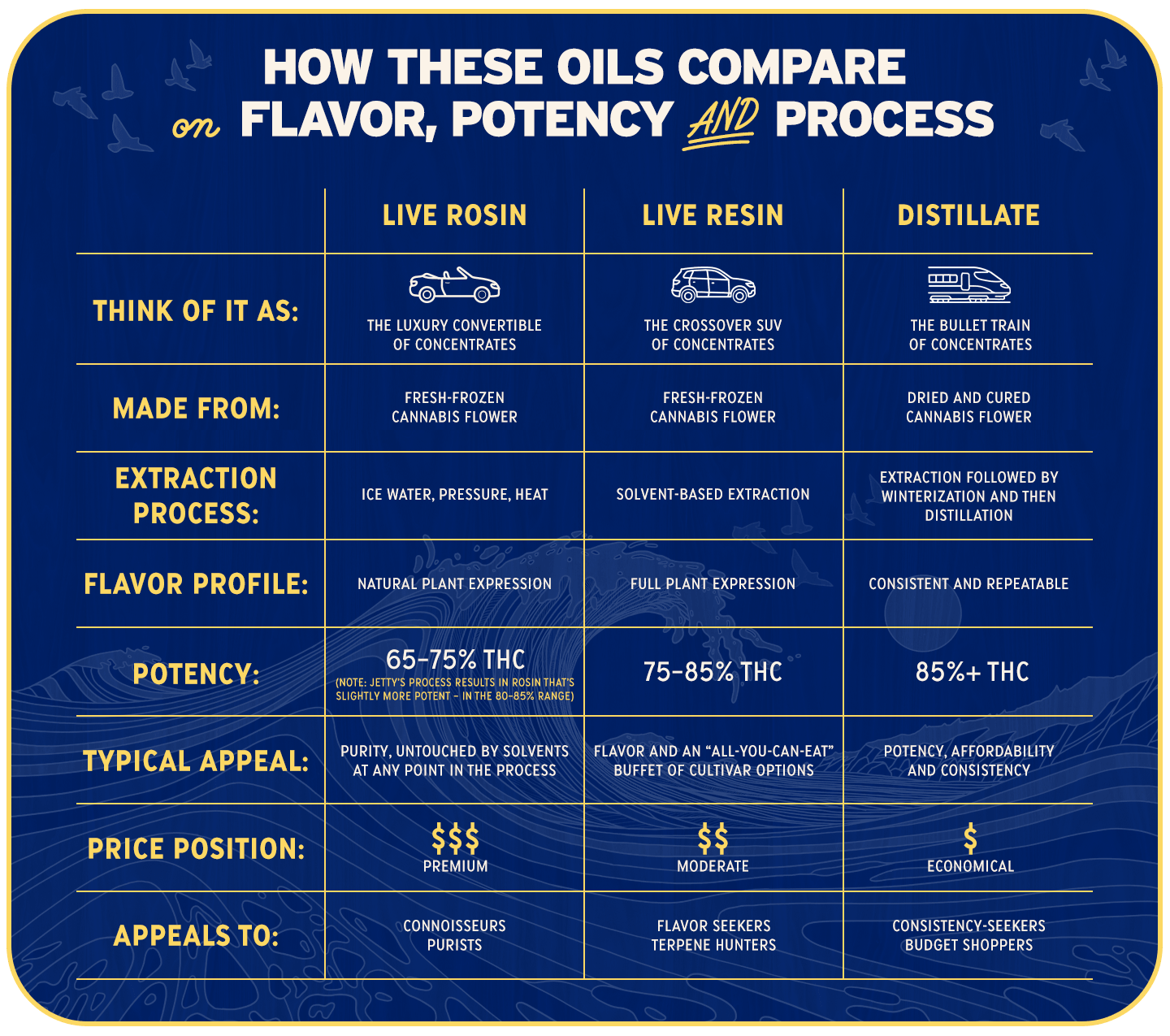
To understand the differences between resin, rosin and distillate and why they matter, think of them like different modes of transportation. Whether you choose to go from point A to point B by crossover SUV, luxury convertible or bullet train, you’re still going to the exact same place.
What makes them different are the technologies, efficiencies and costs that went into them — as well as the end-user experience that comes out of them.
And, just as importantly, none of those modes of transportation are “better” or “worse” than any other one – they’re just different, and deciding on one over the other is purely a matter of picking what’s important to you in the moment.
The challenge, of course, is that while the differences between an SUV, a convertible and a train are familiar and obvious to most of us, the differences between resin, rosin and distillate are much less so.
Until you take a more granular look at how each one makes the transformation from plant to end product. Which is what we’re going to do below.
Live Resin: Built for Flavor and Strain Expression
In the concentrate-as-conveyance analogy, think of live resin like a crossover SUV; a mode of transport that balances cost and convenience and gets you just about anywhere you need to go.
(The “live” designation, which Jetty uses with both our resin and rosin offerings, means that we’re starting with cannabis plants that are fresh-frozen shortly after harvesting to preserve terpenes and other parts of the flavor profile that are lost when the herb is dried and cured.)
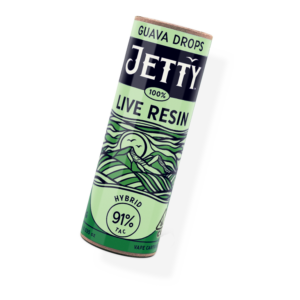
Resin ( note the “e”) is cannabis concentrate made by using a solvent — (Jetty uses propane and butane to remove the cannabinoids and terpenes from the biomass. (Afterward, the solvent is removed and re-used in future extractions.) “Because we’re cutting it down and freezing it right away, the plant keeps a lot of the same characteristics it did while it was still on the stalk,” Jetty Extracts co-founder and head of production Nate Ferguson explained.
“We do a cryo-extraction at negative 60 degrees [Fahrenheit], and it’s kept cold throughout the whole process, which helps preserve not only a huge array of terpenes but all the aromatics, ketones, aldehydes and esters too. All of those compounds are preserved.”
Ferguson added that, while some extraction methods are less effective when it comes to certain cultivars or preserving particular cannabinoids, hydrocarbon extraction works across the board. “The result,” he said, “is more strain varieties are available, so you get many different terpene profiles and a wider range of effects. It’s more of an all-you-can-eat buffet with plenty of choices.”
Rosin: A Solventless, Premium Option
Sometimes, the most important consideration in getting from one place to another is being able to be as close to nature as possible and to be able to stop and smell the flowers along the way.
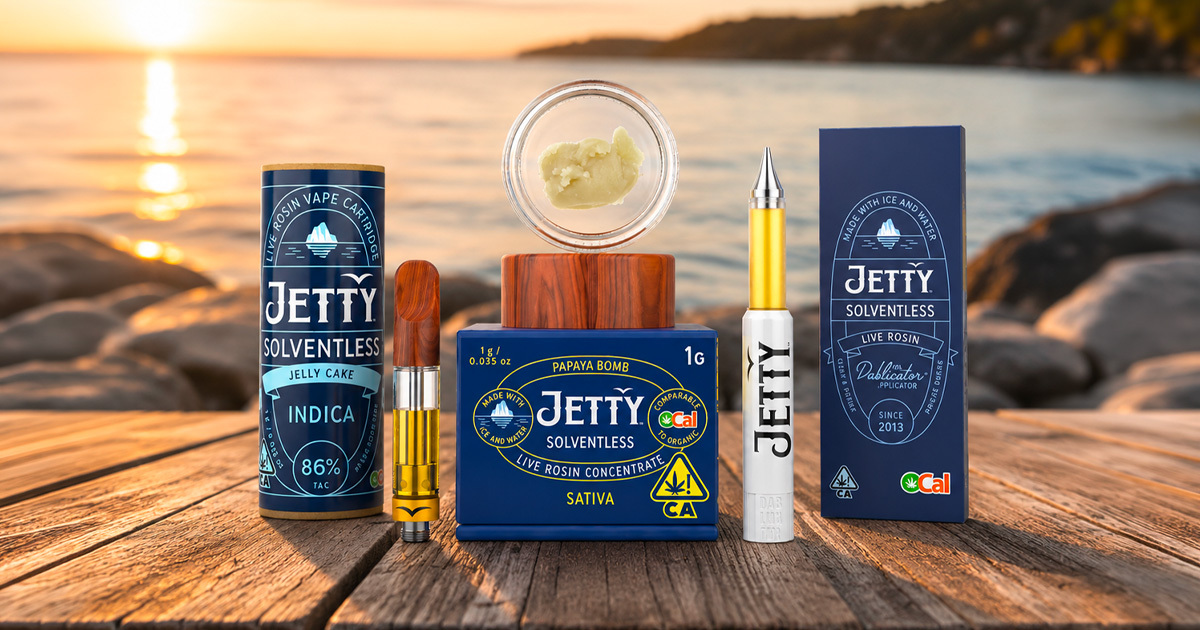
Transportation-wise, that means hopping in a luxury convertible and putting the roof down. Concentrate-wise, that means looking for the word rosin (note the “o”) on the label, which denotes that the concentrate is made using only a combination of temperature and agitation and no solvents are used at any point in the extraction or processing cycle.
(Ferguson points out that while there is no third-party oversight over the use of the terms resin and rosin in the cannabis industry, Jetty only uses the word rosin to denote 100% pure solventless concentrates.)
As a result of the more hands-on extraction process and the purity of the final product, live rosin often ends up on the more expensive end of dispensary menus. It also tends to be sought out by shoppers looking for a more refined, craft-forward option.
Ferguson said that Jetty, which was founded in 2013, started offering solventless rosin in 2020 and it quickly became the company’s flagship offering and its biggest category.
“We’re actually number one in the country in live rosin total sales,” he said. “And that category is growing the fastest for us compared to the other two.”
Distillate: Consistent, Potent and Straightforward
Distillate is the bullet train of concentrates; dependable, reliable, efficient and powerful, a combination that has everything to do with how it’s made.
Ferguson explained that Jetty Extracts’ distillate goes through a three-stage process that starts with an ethanol extraction, followed by a process called winterization (a refinement that removes heavy compounds like fats and waxes) and then distillation.
He noted that both of the additional post-extraction steps do two things: they further increase the potency of the end product and remove the terpenes and other flavor compounds that then need to be added in. That, he pointed out, is where the consistency part of the equation comes in.
“The secret sauce is that we have a proprietary recipe of cannabis-derived terpenes mixed with botanical terpenes [that are added back in] to sort of give it a backbone,” Ferguson said. “One of the things we kind of heard in the early days was ‘When I open a can of Coca-Cola, I want it to taste like Coca-Cola’ meaning people want the same, repeatable experience every time.
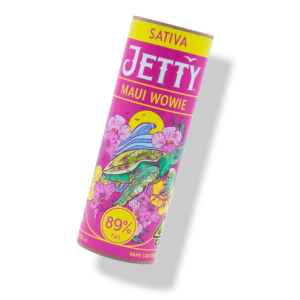
And this line is very much that way; if you get a Maui Wowie, a Sour Diesel or an Alien OG, it’s going to have a similar taste and experience.”
Because it’s such an efficient way of turning cannabis plants into cannabis concentrates, and, at Jetty anyway, the plants destined for distillate don’t require being fresh-frozen right after harvest, distillate products end up being less expensive to make – and, as a result, generally less expensive for the end user to buy.
What Matters More Than THC Percentage
Let’s revisit the transportation analogy to figure out how important the THC percentage should be in making your dispensary decision.
Focusing on that number alone would kind of be like figuring out your route from one place to the other based purely on the availability of high-octane gasoline; it will certainly get you where you want to go, but there are many more important factors in play to consider.
In the world of cannabis concentrates, terpene profiles and the ratio of cannabinoids to each other (those are the numbers on either sides of the colon on a label or in a description.
A 1:1 THC:CBD, for example, means equal proportions), are more accurate indications — a better roadmap if you will — of where you’re headed and how you’ll get there than relying on the THC number alone.

How to Choose the Right Oil for the Moment
So, now that you have a better handle on the differences between live resin, live rosin and distillate and why they’re important, you can see why choosing an oil is simply a matter of personal preference at any particular point in time. Are you looking for the familiar, reliable and perhaps a little more potent puff without breaking the bank?
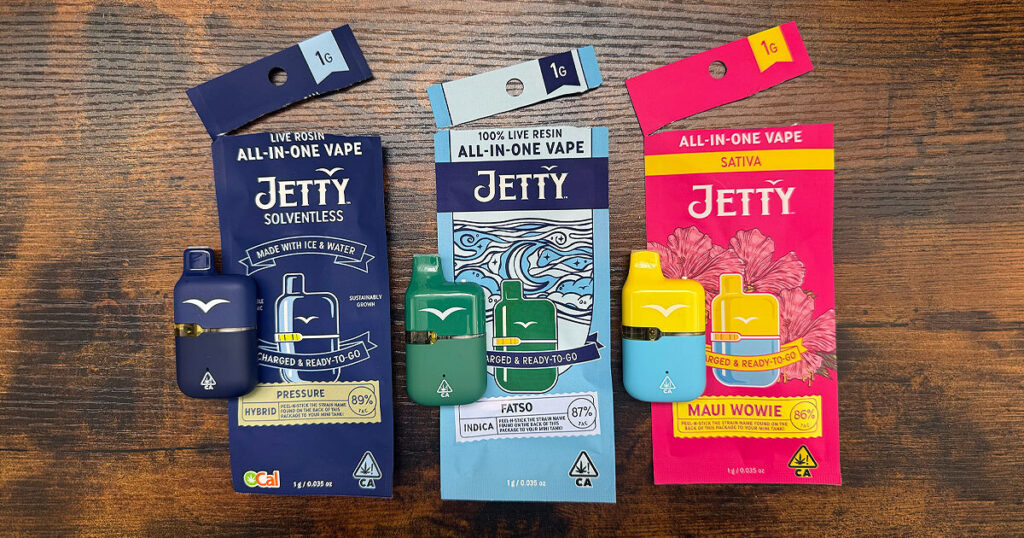
Then look for something like Jetty’s High THC offerings (like the Maui Wowie Mini Tank, for example) on the menu.
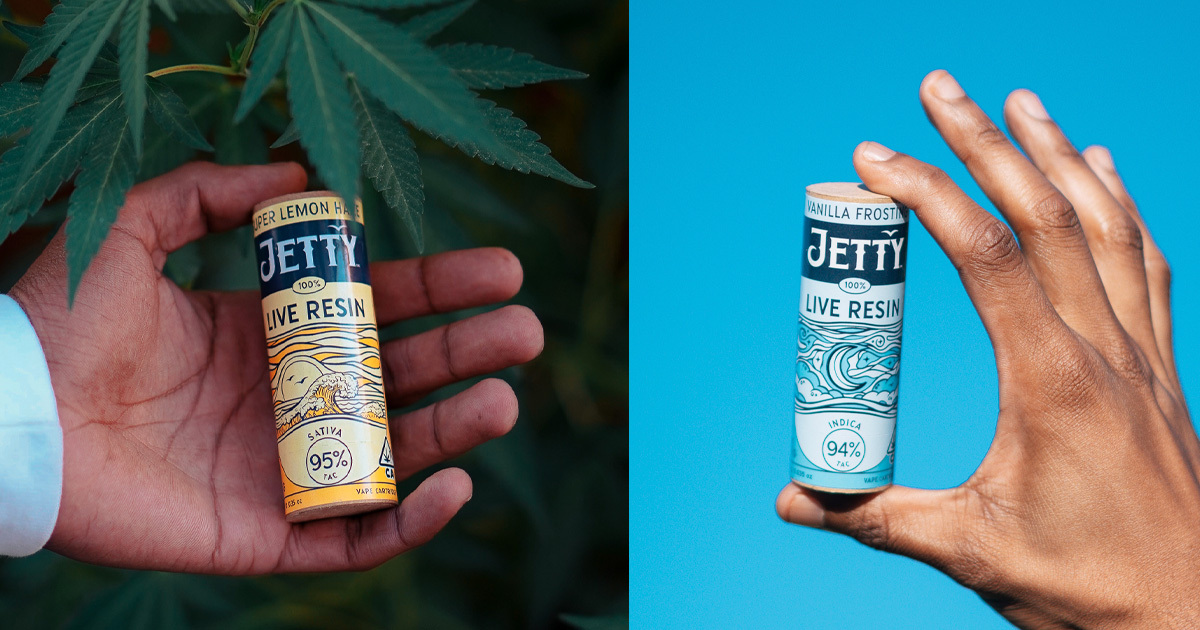
If it’s flavor in the driver’s seat with a bumper crop of cultivar choices riding shotgun, dial down on the live resin options. (Jetty’s 510 carts of Super Lemon Haze are a solid pick here.)
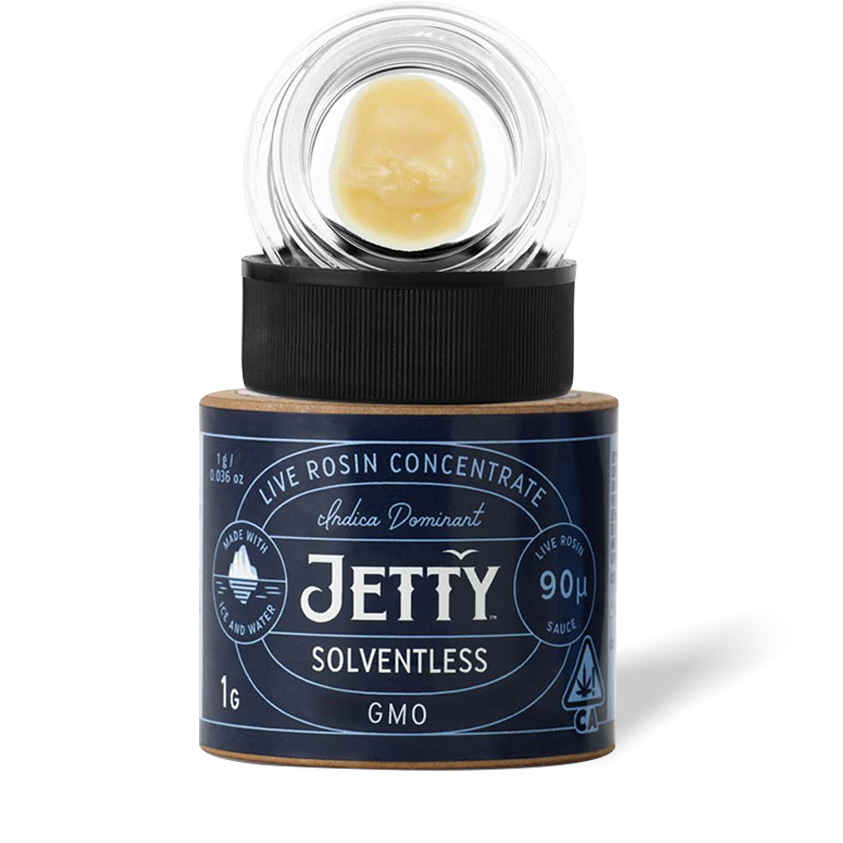
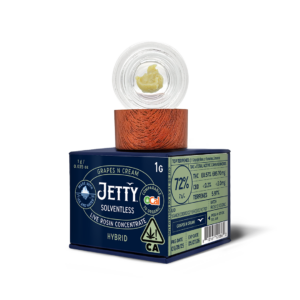
And, if you’re thinking that what matters most is experiencing the purest expression of the plant, extracted using nothing more than ice and water, make live rosin (again, mind the “o” in the second spot) the goal of your next dispensary treasure hunt. (A jar of Jetty Extracts’ Banana Punch would be a good place to start — or end — that search.)
As Nate Ferguson pointed out above, there are few hard and fast labeling rules when it comes to live resin, live rosin and distillate, but the ones that do exist are worth looking for.
“One thing I would point to in California is that our live rosin has OCal (comparable to organic) certification so that’s an easy thing to point to. We’re working on bringing [similar] certifications to New York and Colorado, but those markets don’t have it yet.
And, in Colorado, you need to list [any solvents you use] as an ingredient on the label and that’s actually checked by Colorado’s MED [Marijuana Enforcement Division] so that’s something to look for there.”
“Jetty says what it means and means what we say,” he added. “So, for us it’s about putting your trust in a brand.” In other words, at Jetty Extracts, if it says “live rosin” on the label, you’ve got the word of the number one brand in the market that it was made without solvents.
So, next time you encounter those vape carts filled with golden oils and those jars of yellow-hued goop, you know where to look (start with the label) and what kinds of things to ask your budtender (“Take me to your jars of live rosin,” is a good opening salvo) to plot your concentrate course forward.
How you choose to get where you’re going has nothing to do with what’s “better” or “worse,” and everything about what kind of experience you’re looking for along the way.