





Lorem ipsum dolor sit amet, consectetur adipiscing elit, sed do eiusmod
Get Details

JETTY STORIES

Lorem ipsum dolor sit amet, consectetur adipiscing elit, sed do eiusmod tempor incididunt ut labore et dolore
magna aliqua. Ut enim ad minim veniam, quis nostrud. You can see our full line up here.
Shelter Project–branded graphic featuring Jim Stockinger in California, Aimee Schaller in Colorado, and Lisa Ingraham in New York standing together outdoors and smiling, alongside the headline “Cannabis Patient Stories: Finding Relief, Dignity, & Quality of Life Through Compassionate Care.”
January 7, 2026
SHARE THIS
Share on facebook
Share on linkedin
Share on twitter

Table of Contents

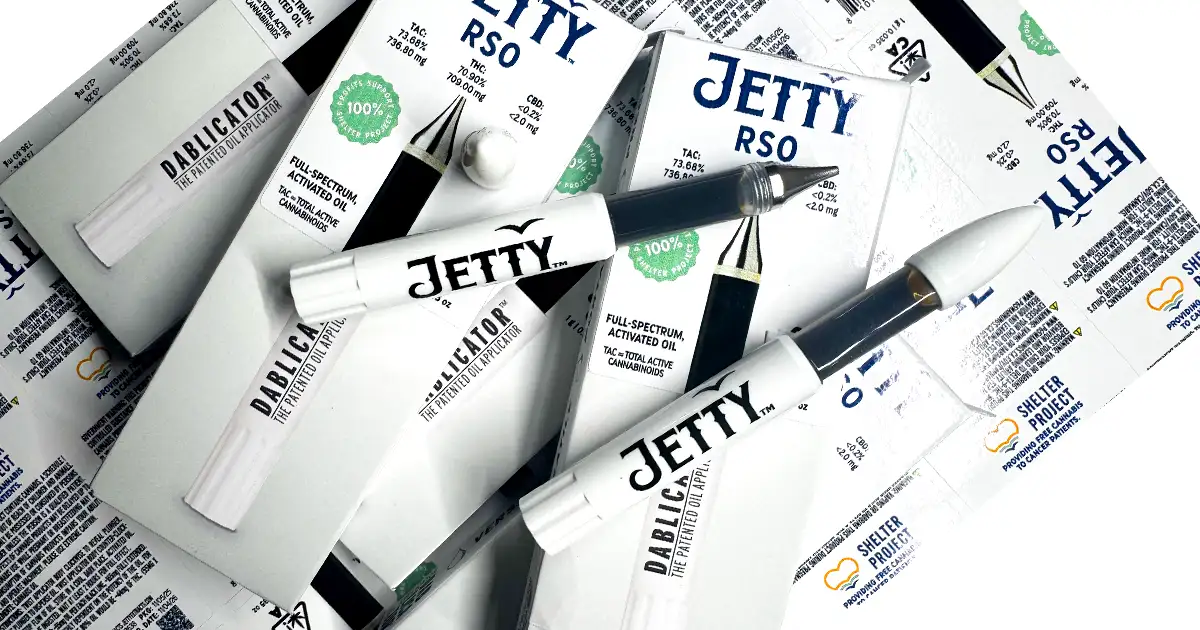
Overhead view of multiple Jetty Extracts RSO dablicators and packaging arranged together, highlighting full-spectrum activated oil and Shelter Project support for cancer patients.

For cancer patients navigating treatment, survivorship, and uncertainty, cannabis can play a meaningful role in comfort, symptom management, and day-to-day quality of life. 

Across California, Colorado, and New York, participants connected to Jetty Extracts’ Shelter Project have shared how access to clean, carefully made cannabis (like solventless vapes and Dablicator™ oil applicators) has helped them through some of their most challenging moments.

The stories below reflect those experiences in patients’ own words. They are not medical claims or program explanations.

They are personal accounts of relief, resilience, and the difference compassionate cannabis access can make when financial strain and serious illness intersect.

Readers looking to learn more about eligibility, enrollment periods, or how the Shelter Project operates can visit the Jetty Extracts Shelter Project page.

Cannabis Patient Stories From The Shelter Project

Jim in California: “I Feel Like I’m Hedging My Bets”

A rare, aggressive cancer
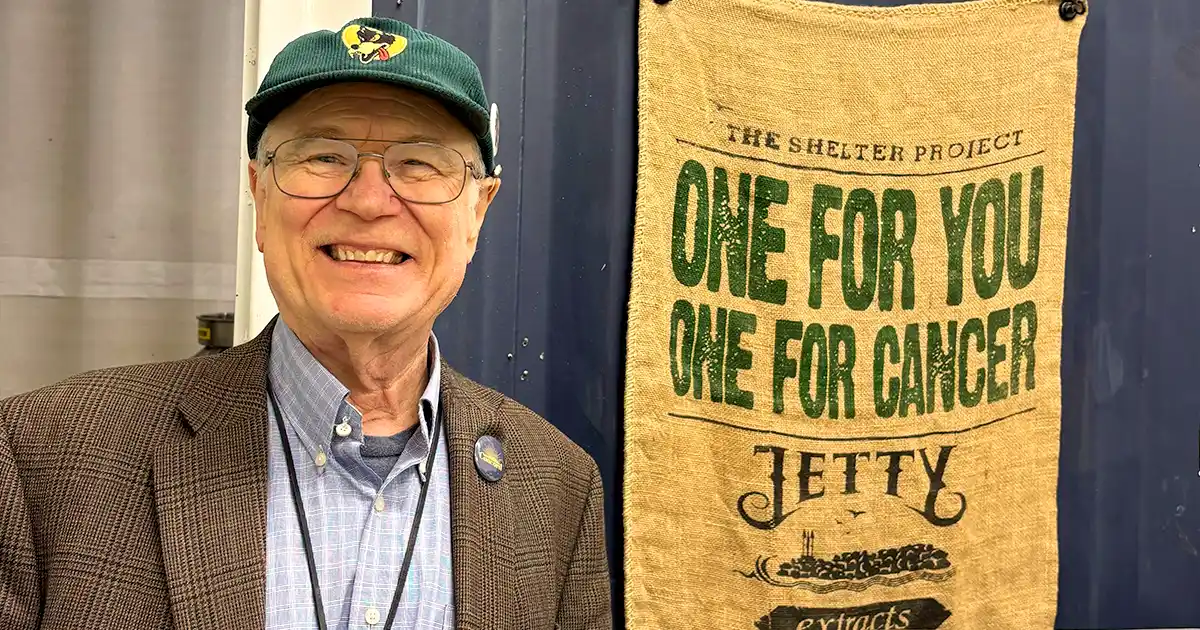
Jim Stockinger smiling in California, standing beside a Shelter Project banner reading “One for You, One for Cancer” by Jetty Extracts.

Jim Stockinger, 79, a retired UC Berkeley infant-toddler educator and sociology lecturer who lives in Oakland, California, started taking cannabis concentrates shortly after he was diagnosed with plasmacytoid bladder cancer in 2016.

“My ex-wife recommended it,” he said, “because she knew someone who had used cannabis [in a similar situation] and found it very effective….”

Stockinger describes the cancer he’s battling as “extremely rare and aggressive” and explained that the standard course of treatment is chemotherapy followed by removal of the bladder and replacing it with an artificial one.

But, he says, when the surgeons opened him to perform the procedure, they determined they couldn’t proceed because of how far the cancer had spread. “That,” he recalls, “was a very sad moment.” 

Immunotherapy, cannabis and a “poster boy” outcome

Stockinger’s oncologist pivoted instead to a course of immunotherapy — which was a relatively new treatment at the time — and the results were striking. “She calls me the poster boy for this treatment,” he says.

In 2018, when the sublingual cannabis products he’d been using became unavailable, a budtender recommended he check out the Shelter Project. He applied, was accepted and has been part of the program ever since, picking up his donations every other month at Berkeley Patients Group. He says he was upfront with his oncologist about his daily doses with the Dablicator™

“She was familiar with the research most of it done outside  of the U.S. on cannabis and cancer cells and, given my outcome, didn’t see any reason I should stop,” he  recalls. “So she said I should keep doing what I was doing.” 

He estimates the program has saved him thousands of dollars since he joined, and he hasn’t needed to purchase other cannabis products outside the Shelter donations.

CT scans and “hedging bets”

Several years ago, Jim and his oncologist decided to stop immunotherapy due to a lack of long-term research on extended use. He still goes in for CT scans every three months.

So far, they’ve looked good — including the one he just had.

“That’s all the more reason I wanted to keep using the concentrate,” he says. “A good way to put it is that I feel like I’m hedging my bets.”

Jim’s advice to prospective Shelter Project participants

“ For anybody who is undergoing immunotherapy which is not pleasant in terms of dealing with the symptoms the Shelter Project can be really wonderful for that.

He notes that Jetty’s reputation as a clean weed brand is an added bonus.

“I have a certain amount of confidence that I’m not getting any kinds of unwanted chemicals,” he says, “And that’s something legitimate to think about.” 


Aimee in Colorado: “Shorter Bouts of Nausea, Duller Pain”

A two-decade, multi-state cancer battle

Aimee Schaller, a 49-year-old resident of Colorado Springs, is more than 20 years into her battle with adrenocortical carcinoma. “Usually most people end up having an adrenalectomy — having one of their adrenal glands removed — and then the other one will start working again.

But mine never did, so now I have two health problems that supposedly can’t happen in the same body. Because of that and my other health problems, the cancer just never seems to go away. Because of all of that, I started being part of the Shelter Project in 2015.”

Jetty’s donation program was just a year old at the time, and Schaller was living in Northern California. When a budtender first told her about it, she had her doubts. 

“You hear about things like this and never actually see them,” she recalls thinking. “But I looked online and thought, ‘This actually looks legit’.”

She was enrolled for just a year before a move to Florida made her ineligible to continue participating. Then, years later, a subsequent move — this time to Colorado — put her back in Jetty’s orbit. So, when the Shelter Project launched there, she was quick to re-apply.  

“I’d actually given up. Apparently they hadn’t.”

At first, a host of issues (including living in subsidized housing and not having a medical marijuana ID card) made her think she wouldn’t qualify, and she told the Shelter team she understood and let it go.

“I figured, well, I’m not going to be able to do this,” she says. “And three months later, they got a hold of me and said they’d gotten it worked out. I was like ‘You know, I’d forgotten about this, I’d actually given up.’ But apparently they hadn’t, which is amazing, because most people would be like, ‘We can’t help you,’ and that’s the end of that. But they really went out of their way to help.”

Dulling chronic pain, shorter bouts of nausea

“Because my bones are basically eating away at themselves from the steroids, I have a lot of pain, so it dulls that,” Schaller says. “And it can  actually get rid of the nausea altogether. Usually, when I start getting sick, it’ll happen for hours, until my body is finally like ‘OK, fine. Stop.’

And if I smoke some [cannabis], then it goes away a lot quicker. Sometimes an hour after I get sick, I’ll be fine and no longer throwing up.”

Schaller says if she had to pay for the Dablicators or vape carts she picks up from Kika Kush in Colorado Springs (one of only three participating dispensaries in the entire state) on a regular basis, it would strain an already tight budget.

“If I bought four grams of Jetty [Extracts concentrate] every month, it would probably be over $300. And that’s a lot of money – especially when you don’t have a lot of money. And I’ve been on disability for a while now.”

Aimee’s advice to prospective Shelter Project participants

“You should try no matter what,” she advises anyone thinking about filling out the open enrollment form. “Worst case, nothing happens. Best case, you save a lot of money every month and get better products.

“If it’s legal, you have access to it, and Jetty is willing to give it to you, why not try?”

Lisa in New York: “It helps with ‘Scanxiety’

A ‘unicorn of unicorns’ and a double diagnosis

Lisa Ingraham, 48, lives in Irving, New York, a town in the western part of the state sandwiched between Lake Erie and the New York Throughway. And she’s been fighting neuroendocrine carcinoid tumors of the lung since 2019.

“It’s kind of like the unicorn of unicorns,” she says. “Usually it’s in the pancreas, but a small portion of people have it in the lungs or a couple other areas.”

Ingraham says that surgery sent that double unicorn packing but only temporarily. “I was clear for four and a half years,” she recounts. “And then, in July of 2023, I had my second go-around. And this time it was Stage 4.”   

Although she was living in San Diego and aware of the Shelter Project when she was first diagnosed, she moved out of the state a few months later so hadn’t been able to enroll in the program. 

“I’ve actually had Jetty on my radar for a really long time,” she says. “Fun fact: when I was living in San Diego, the very first vape cartridge I ever had was one from Jetty Extracts that a friend gave me to try.”

‘As soon as [the Shelter Project] became available here, I applied’

Between that first and second diagnosis, Ingraham had moved a handful of times, navigated a pandemic, a divorce and several job changes. But the brand, and its goal of delivering chemical-free cannabis was always in the back of her mind.

“I’d been following along with what Jetty had been doing through the years,” she says. “And by the time I was re-diagnosed I’d become disabled and I was no longer in the workforce.

That meant a lot of financial issues on top of being a fulltime sick person. I kept asking ‘Are you guys going to open [the Shelter Project] in New York?’ And, as soon as it became available, I applied.”

Survivorship and fending off  ‘Scanxiety’

For Lisa, the donations she’s been picking up at Buffalo Dreams  (one of only two partner dispensary depots in the entire state) since earlier this year, help navigate what she calls “survivorship.” 

“What people who have a terminal diagnosis are dealing with isn’t necessarily healing,” she explains. “It’s more a quality of life you’re looking for and cannabis helps with that on a couple of different levels: pain management, anxiety, depression and then just all the daily stuff I’m going through like going for scans.

They even have a word for it, They call it ‘scan anxiety’ or ‘scanxiety.’ For that, I would rather use a cannabis product like the Dablicator and just put some in my tea. Or even if I just want to get out in the garden. It helps to just be able to enjoy things.”

Lisa’s Advice to Prospective Shelter Project Participants

Ingraham says that cancer patients who think they might similarly benefit should definitely communicate with their doctors. “Talk to your oncologist, talk to your palliative care physician,” she urges.

“And also communicate with Jetty. They have been really wonderful [helping me navigate] things. If you have questions about the program or need help setting it up they’re very responsive, which is wonderful.”

How to Apply or Get Involved with Jetty’s Compassionate Cannabis Program

These patient stories underscore why compassionate cannabis programs still matter. Not as marketing initiatives, but as lifelines rooted in dignity, trust, and access to clean medicine.

Jetty Extracts continues to support patients through the Shelter Project by working alongside licensed dispensary partners and prioritizing safety, consistency, and care. For those interested in learning more about the program, eligibility requirements, or how to apply, additional information is available on the Jetty Extracts Shelter Project page.

For questions about the application process or enrollment periods, patients and caregivers can reach out directly at shelteroutreach@jettyextracts.com.

Community, Giving Back, The Shelter Project

Related

VAPE

The cleanest, most flavorful extracts made without ever touching a chemical. Made with just ice and water.

SOLVENTLESS

Solventless, Live Resin, and High THC vapes. The most discreet and convenient way to smoke

Sign Up for a
Chance to Win $500

Lorem ipsum dolor sit amet,
consectetur adipiscing elit

Sign Up for a Chance to Win $500

Lorem ipsum dolor sit amet,
consectetur adipiscing elit